
NEWS
NEWS 2026
August 2026
AHEAD Researchers recognised by Selçuk University and Awarded New TÜBİTAK 1001 Grants
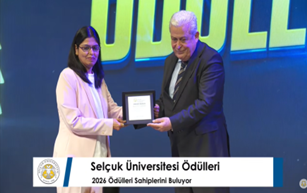
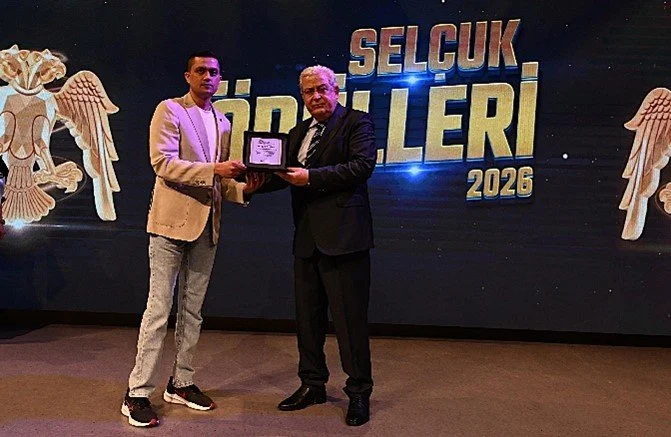
The Selçuk University Project Award was presented by the Selçuk University Rectorate to Dr. Mohd. Kamran Khan (left) and Dr. Anamika Pandey (right). (Photo source: Selcuk University, Turkiye)
Dr. Anamika Pandey and Dr. Mohd. Kamran Khan, Assistant Professors at Selçuk University (Türkiye) received the Selçuk University Project Award in recognition of their outstanding research achievements. The award recognised excellence in scientific research and innovative projects, highlighting their contributions to wheat research and international collaborations focused on improving wheat resilience to abiotic stresses.
Additionally, both scientists have recently been awarded highly competitive TÜBİTAK 1001 research grants as Principal Investigators. The projects investigate the stability of boron tolerance under water-deficit conditions in wheat (Pandeay) and salinity tolerance mechanisms in the ancient wheat species (Khan). Congratulation to these achievements, which are advancing wheat research and promote interdisciplinary collaboration.
Provided by: Anamika Pandey, Mohd. Kamran Khan (Selçuk University ,Türkiye)
August 2026
Spotlight on Root phenotyping - Knowledge shared by EU Project lead
Eu funded project Root2Res - Root phenotyping and genetic improvement for rotational crops resilent to environmental change (Logo)
Root2Res project (https://root2res.eu/project; funded by EU, Innovate UK, Swiss SERI) is at the forefront of Root phenotyping and genetic improvement for rotational crops resilient to environmental change. The project focuses on understanding and enhancing the crucial role roots play in plant health, nutrient uptake, and resilience to environmental stress. One project outcome is a Phenotyping Toolbox, summarising various methods and tools for phenotyping plants, many specifically designed for cereals, to help you find the most suitable approach for your research needs. In addition, results and ongoing work are explained in a Podcast Series, explaining why it's vital to integrate root traits into modern breeding for more sustainable agriculture.
Social Media Links: X (formerly Twitter); LinkedIn
Provided by: Jean-Pierre Cohan (Arvalis, France) - Coordinator of Root2Res
August 2026
High-throughput stomatal phenotyping in field-grown wheat - Succesful collaboration
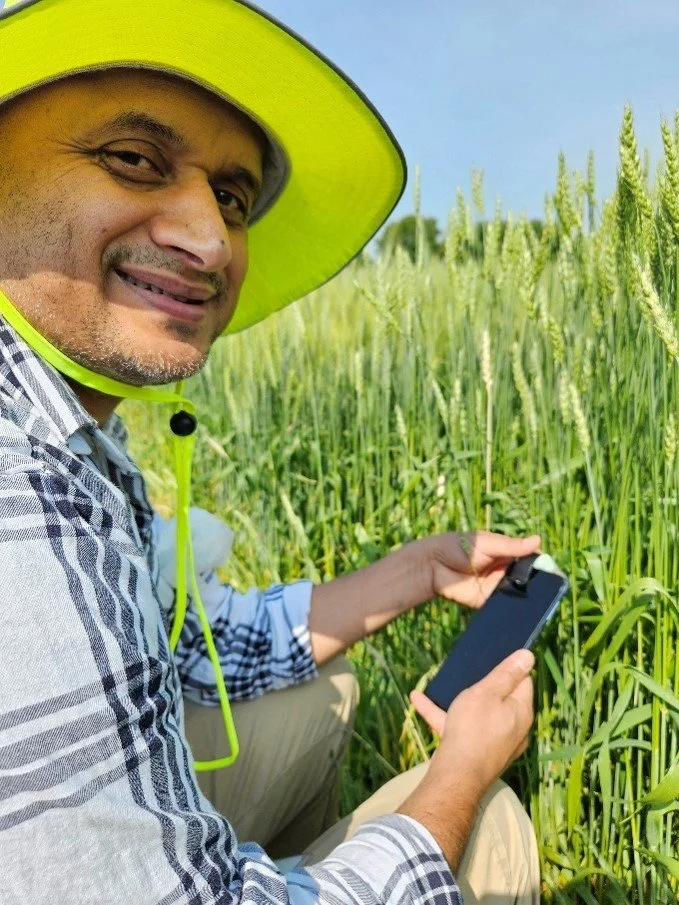
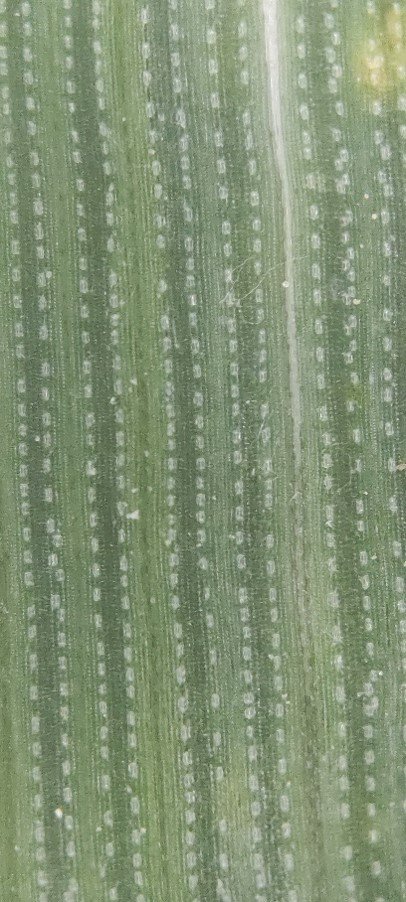
left: Shankar Pahari from AAFC collecting stomatal images from wheat genotypes directly in the field. (Picture by Raju Soolanayakanahally, AAFC). right: Adaxial stomatal architecture of the wheat flag leaf showing stomatal distribution and spacing. (Picture by Shankar Pahari, AAFC)
Agriculture and Agri-Food Canada (AAFC) is advancing high-throughput stomatal imaging in field-grown wheat to identify genotypes with improved water-use efficiency and stress resilience. Beyond stomatal density and size, researchers are capturing stomatal spacing, row alignment, aperture dimensions, and open/closed status. By linking these stomatal traits with physiological performance, aerial thermal imagery, and yield under field conditions, this approach will help identify stomatal characteristics associated with greater water-use efficiency and sustained productivity under drought and heat stress. Ultimately, this work aims to translate rapid stomatal phenotyping into practical selection tools for breeding climate-resilient, water-use-efficient Canadian wheat. Great collaboration between AAFC and MIAtecs (https://www.miatecs.com/) to advance field-based stomatal phenotyping in crops.
Provided by: Raju Soolanayakanahally (Agriculture and Agri-Food Canada AAFC), Canada)
April 2026
Spotlight on one location of the International Wheat Improvement Network( IWIN) mega environment - Pakistan
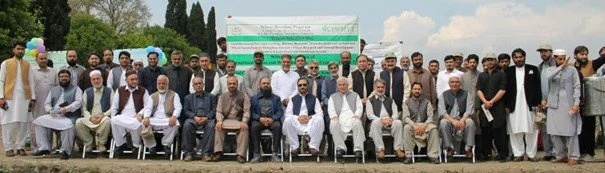
Participants of the Wheat Selection Day at CCRI in April 2026. The Country Head of CIMMYT Pakistan, Dr. Sajid Ali, attended the event (In photo from left to right: people setting in front Row at position 7). (Picture by CCRI, Pirsabak Nowshera)
The Wheat Selection Day (April 9, 2026) was organised by Wheat Breeding Program at Cereal Crops Research Institute (CCRI), Pirsabak Nowshera Pakistan with the support of International Maise and Wheat Improvement Center (CIMMYT).The aim of the event was to bring together scientists for knowledge exchange, strengthening partnerships and germplasm exchange. During the event, the scientists evaluated and select the best wheat lines from various International Wheat Improvement Network (IWIN) nurseries received from CIMMYT Mexico during 2025-26. Furthermore, the selected germplasm will be further evaluated by partner research institutions and will use in future wheat research and varietal development program by partner research institute.
Provided by: Muhammad Ishaq (Barani Agricultural Research Station, Pakistan)
March 2026
New publication from our Network members: Post-anthesis sensitivity and responses to source-sink manipulations in contrasting cultivars
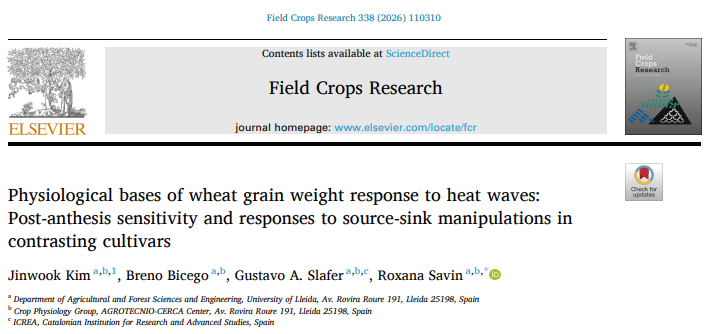
Climate change is increasing both mean temperatures and the frequency of short-term heat waves (HW). Field experiments in NE Spain compared two contrasting wheat cultivars, Pistolo (high average grain weight, AGW) and Sublim (high grain number), exposed to HW at pre-anthesis, at post-anthesis, or both stages sequentially. Source strength was also modified through thinning, defoliation, or de-graining. Pistolo had higher AGW due to faster grain growth but was more sensitive to post-anthesis HW. Source–sink manipulations had limited effects, indicating predominantly direct effects of HW on grain growth capacity, rather than by limiting availability of assimilates due to faster senescence. Combined HW caused less AGW reduction than post-anthesis HW alone, suggesting a possible priming effect or early HW on the effect of the subsequent HW.
Provided by: Roxana Savin, Gustavo Slafer (University of Lleida, Spain)
NEWS 2025
February 2025
AHEAD Virtual Workshop on Heat & Drought Research
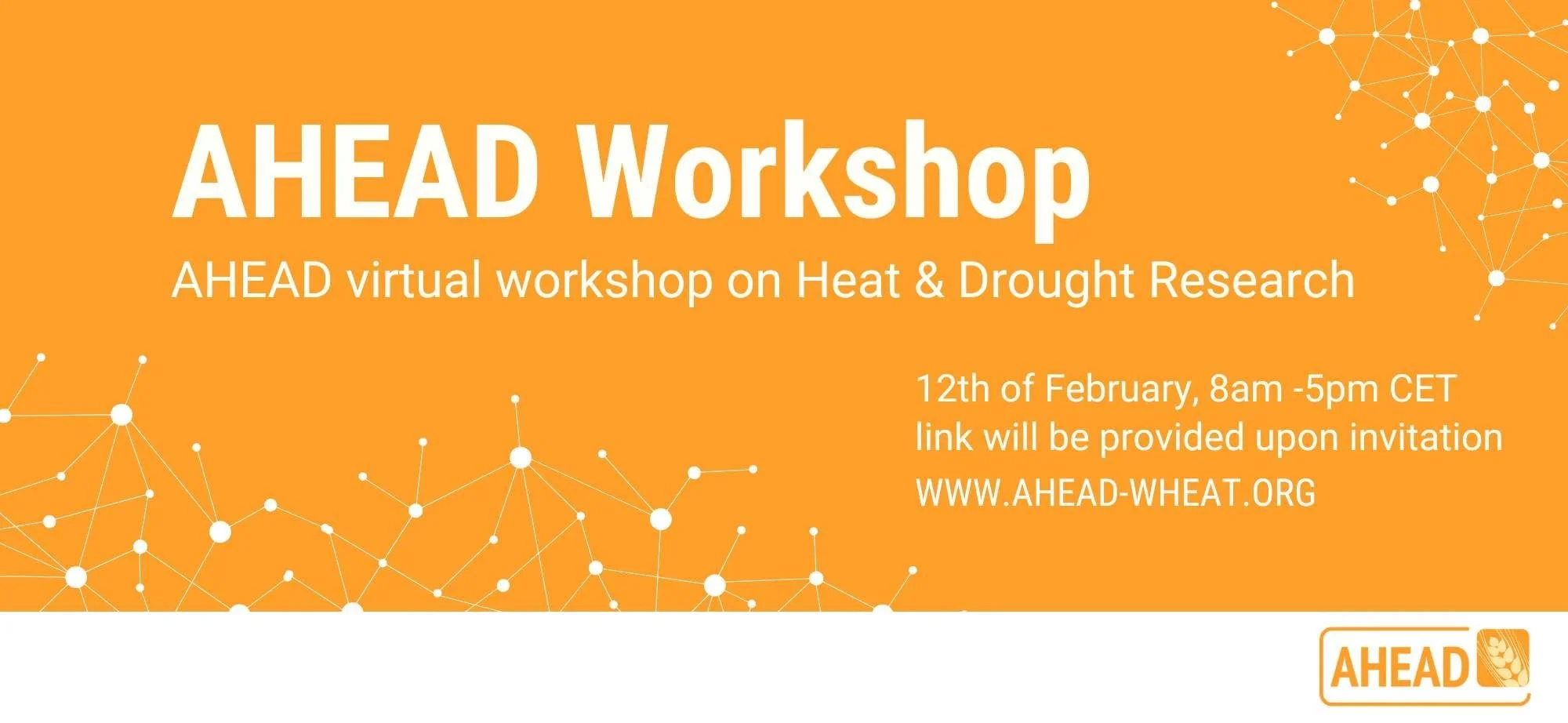
The Alliance for Wheat Adaptation to Heat and Drought aims to provide a platform for researchers to discuss current results and developments in research in this area, to collaborate and to develop solutions to meet the challenges posed by climate change in agricultural systems. Over the past two years the network has welcomed 17 new members from 11 countries. This is a great development and we want to take the community discussions to the next level. In order to create awareness of each other's expertise and research focus, our members will inform the network community about their project results and future plans. Together we will evaluate how the expertise available in this network can be best used.
Provided by: Stefanie Hagemann (AHEAD @Julius Kühn Institute, Germany)